
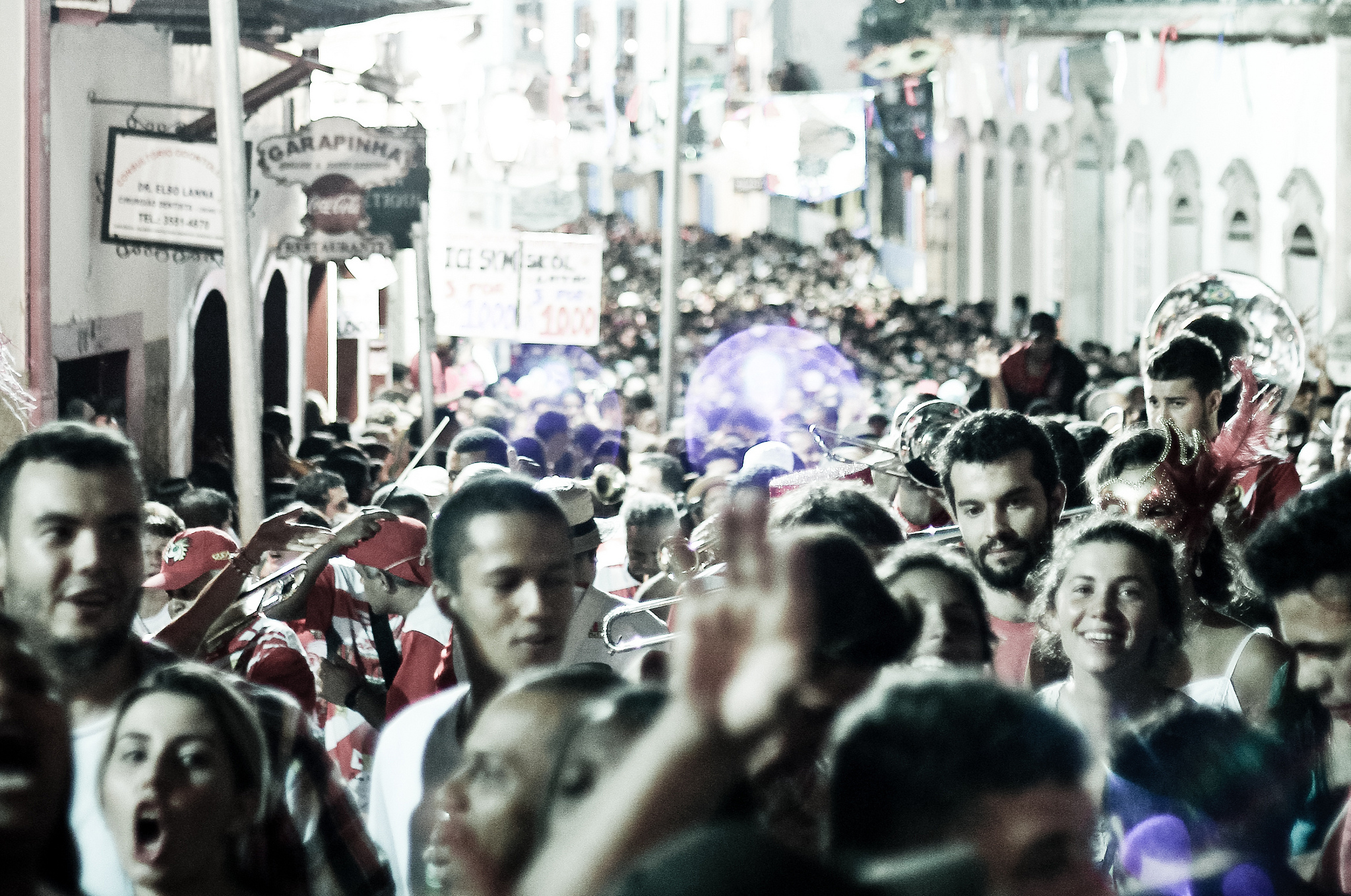
Grito Rock was born in 2002, in an independent initiative, which proposed to fill the gap at the cultural schedule of the “cuiabanos” which didn’t yield to the carnival spree. With the festival’s growth in the year of 2006, other brazillian cities – which betweet the ‘februaries’ of Brazil asking for independent Rock – also started to be a part of the festival. The experience was tested during the following years and was able to inhabit territories yet hostages of mono-culture, ofuscating it’s leading role while ‘Grito’ became even more organic in those places.
Thanks to dedication, analysis capacity and the producer’s proposition, the narrative of the event was reinforced with the sum of creative arrangements which didn’t always presented counterpoints to the carnival, but connected themselves trought it, adding a simbolyc mix to the two parties – the historical tradition and the adequacy made by the current generation.
Artists and bands of the independent circuits transited in spaces occuppied by the traditional spree – many of those over moving stages in crowded squares that, even not knowing it, faced a different context of the traditional ‘mome king’ sprees. The carnival became a strategic arc where the possibilities of circulation flew as in no other time of the year.
Belo Horizonte is one of the examples of Grito’s Rock combination with the carnival that, such as the greates collaborative festival in the planet, is present in urban centers and in “deep Brasil”. Last year’s edition was produced by ‘Casa Fora do Eixo Minas”s team, which transformed the initiative in a carnival bloc called “Grito’s Bloc”
“When I participed at Grito Rock’s production in Belo Horizonte last year we made a carnival bloc, the Grito’s Bloc, mixing blow, percussion and plugged instruments in an open stage for improvisation. It was pure fun”, explains Gabriel Murilo, one of it’s producers.
At the time, Colombina Collective, from Taquaritinga, inner state of São Paulo, obtained the same satisfaction producing the ‘Grito’ up on a moving stage that was around town during carnival. “To produce a Rock Festival, connected to the schedule of a popular carnival capable of reuning 20 000 people a day on the streets of a small town, sounded impossible until we did it”, says the coordinator Evandro Camargo. “The result were 2 days of free festival, with 6 bands from brazillian and world’s independente scene, making the show up on moving stages. From the independent music afternoons until the nights with tradicional marchs, the schedule of 2013 Carnival in Taquaritinga had the intensity of an accurate Grito Rock”, he completes.
What about you? Do you still have doubts that it can work out where you live?